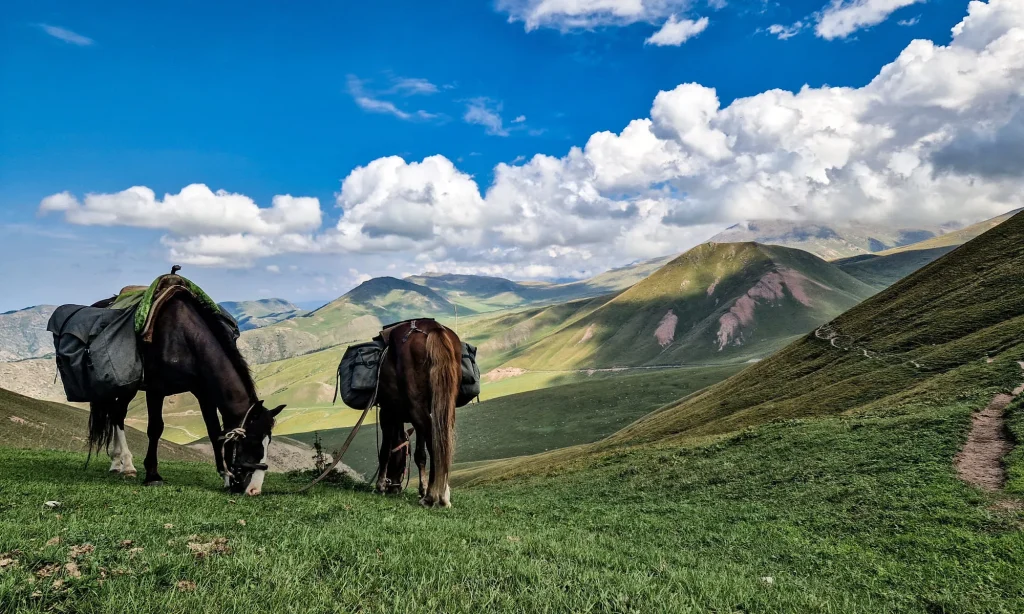
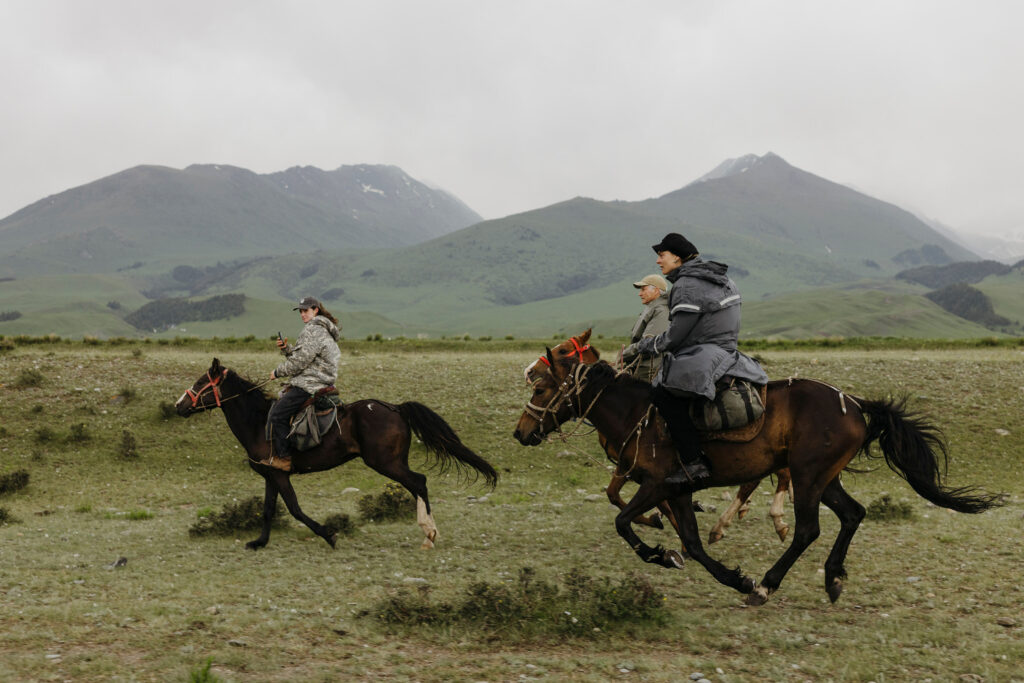
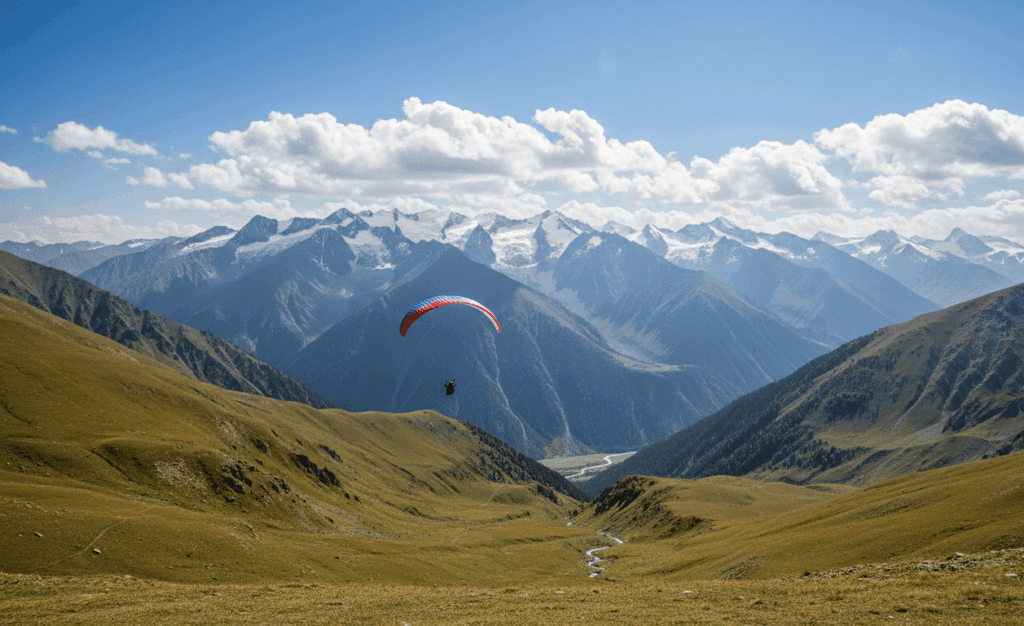
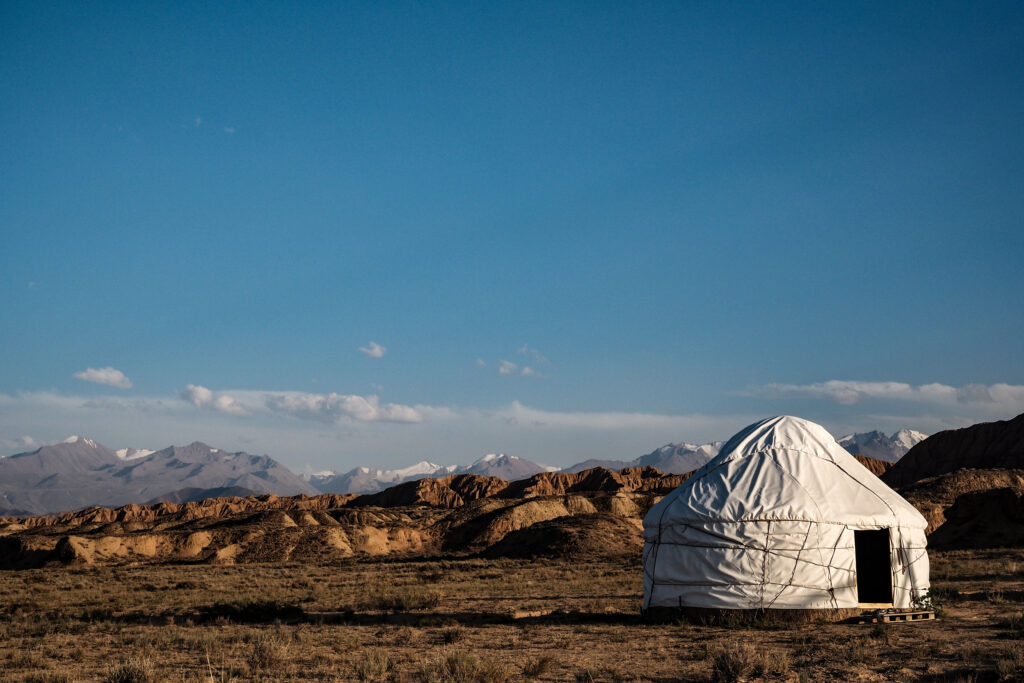
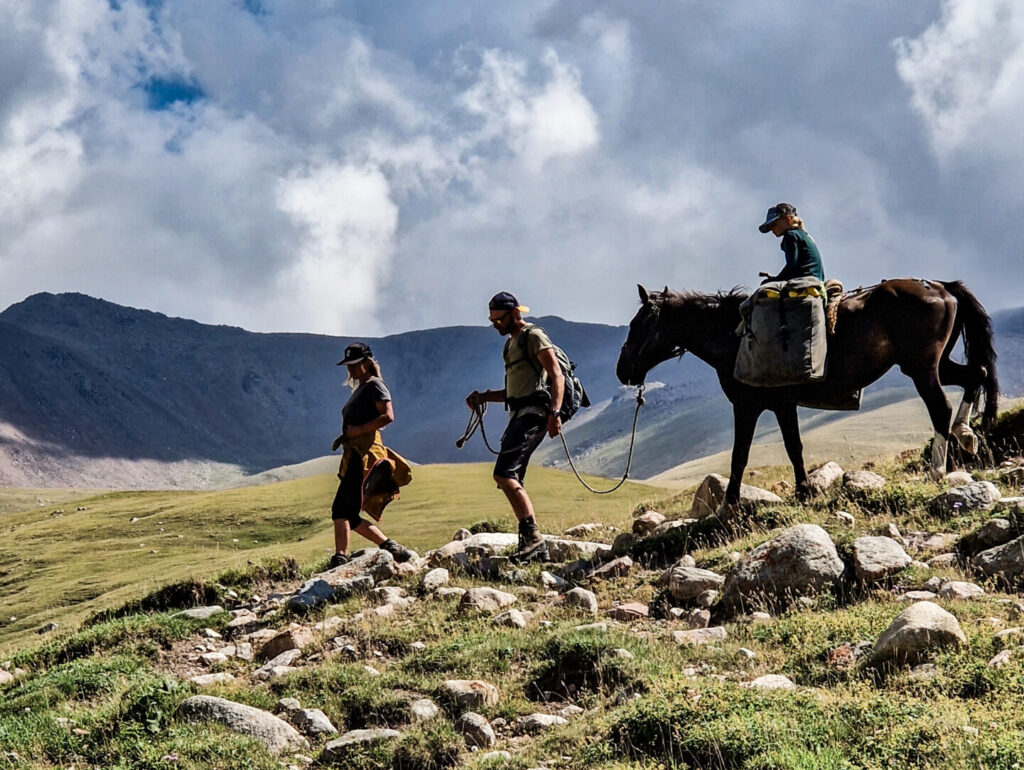
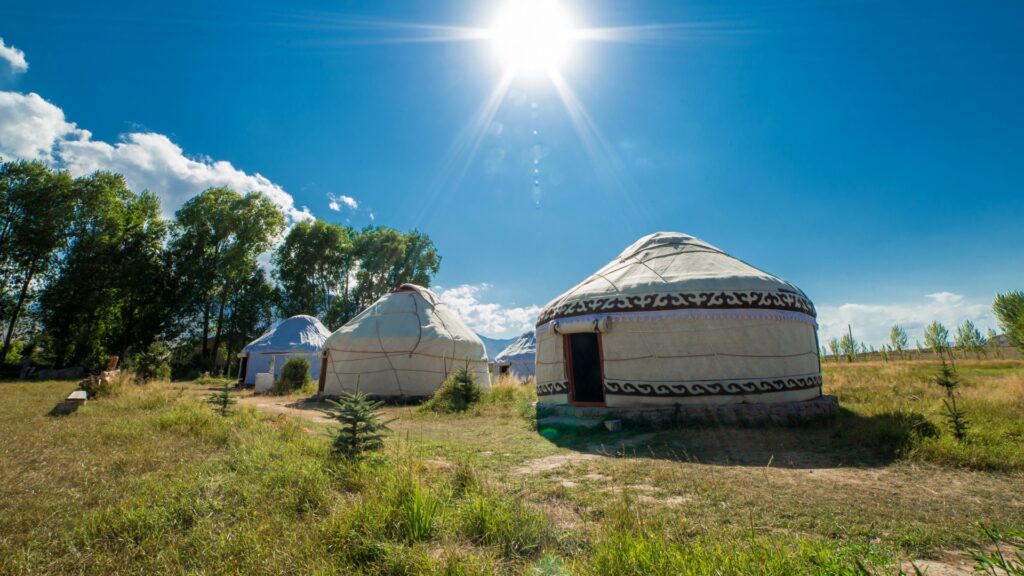
Adventure travel in Kyrgyzstan — horse trekking, paragliding, ski touring and trailrunning in the Tian Shan mountains.
Kyrgyzstan is 94% mountains. There is no flat horizon, no gentle introduction — the Tian Shan fills the sky in every direction, and the country’s valleys, passes, and summer pastures (jailoos) have been the foundation of nomadic life for thousands of years.
For tunduk, Kyrgyzstan is home base. It is where we run the most trips, where many of our guides were born, and where our understanding of the land runs deepest. Whether you come for ski touring, horse trekking, packrafting, paragliding or running — you are moving through terrain that has been shaped by the same forces, the same season cycles, the same relationship between people and mountains, for as long as anyone can remember.
Why tunduk travels here
Kyrgyzstan is where tunduk is rooted. An expedition on horses in 2010 turned into a winter basecamp experiment, which transitioned into tunduk as a company. Many of our guides are Kyrgyz. Our horses come from local families. When you travel with us here, you are not visiting the country — you are moving the way like the people who have always moved through it.
Praktische Informationen
Landscape
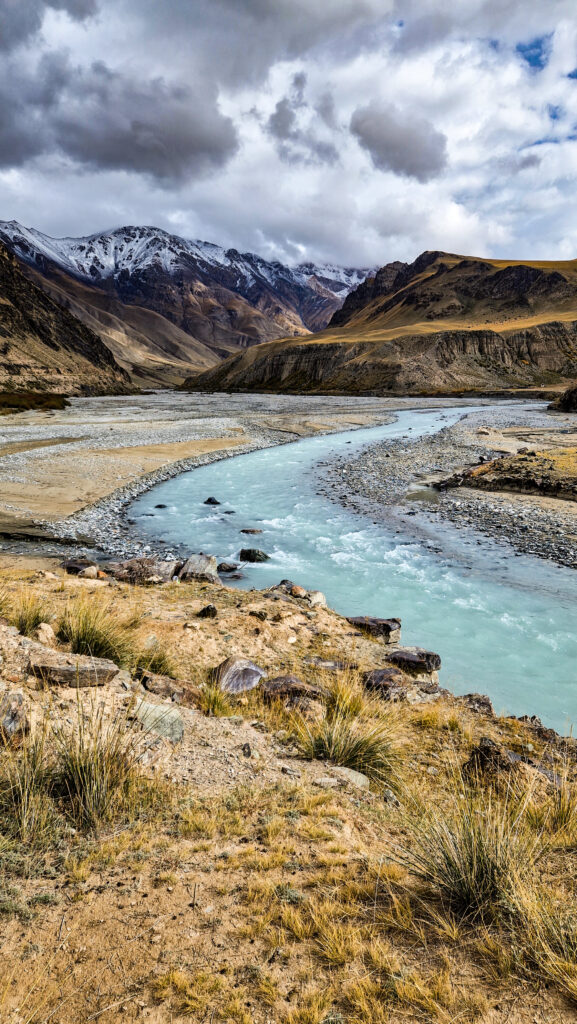
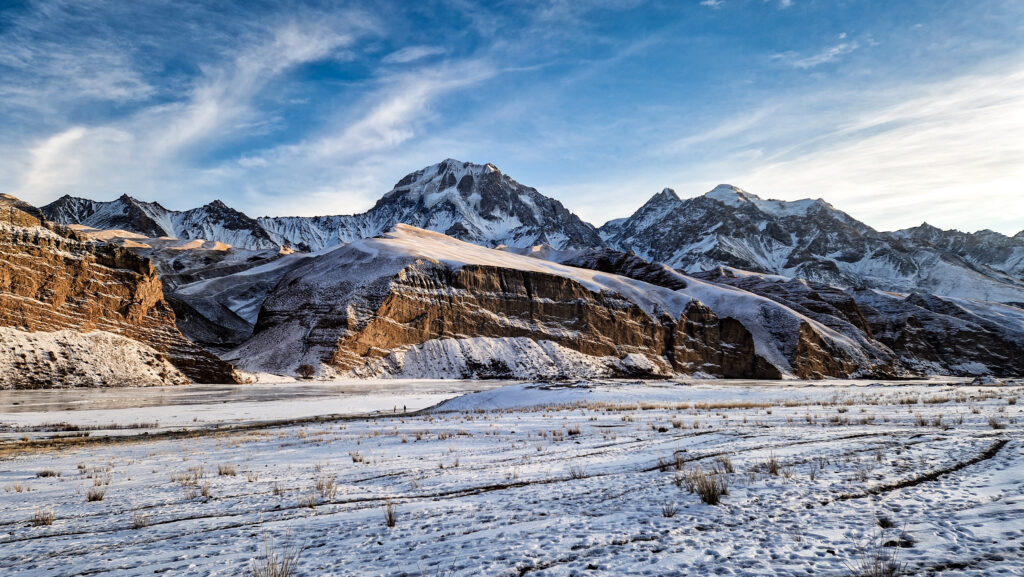
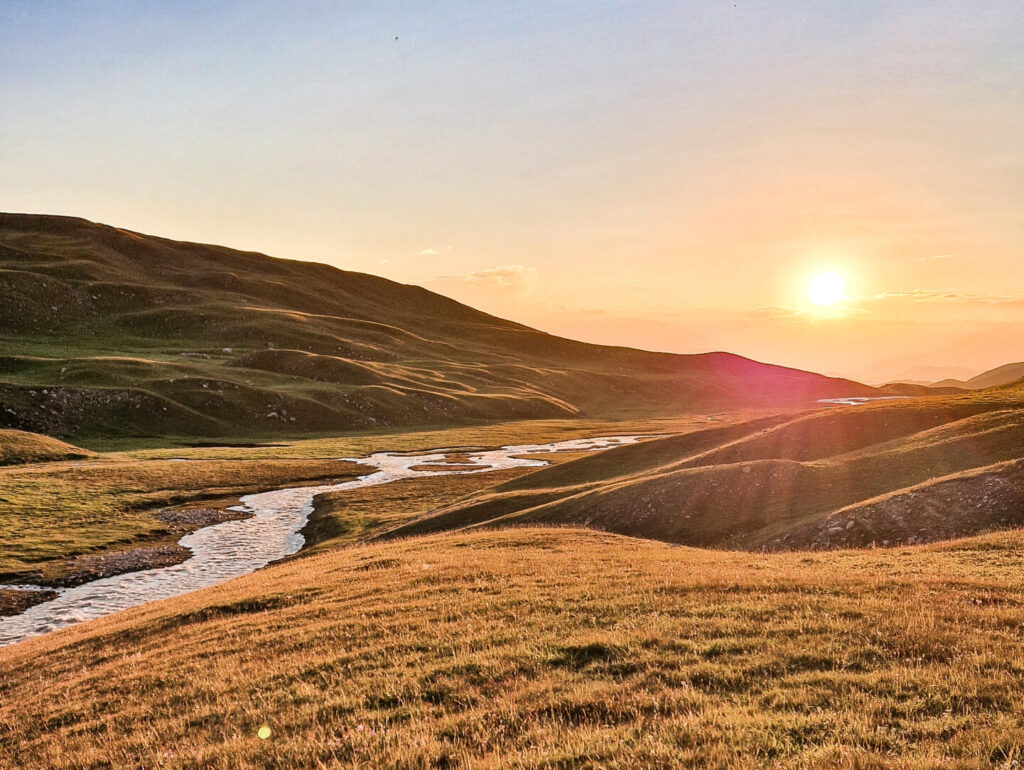
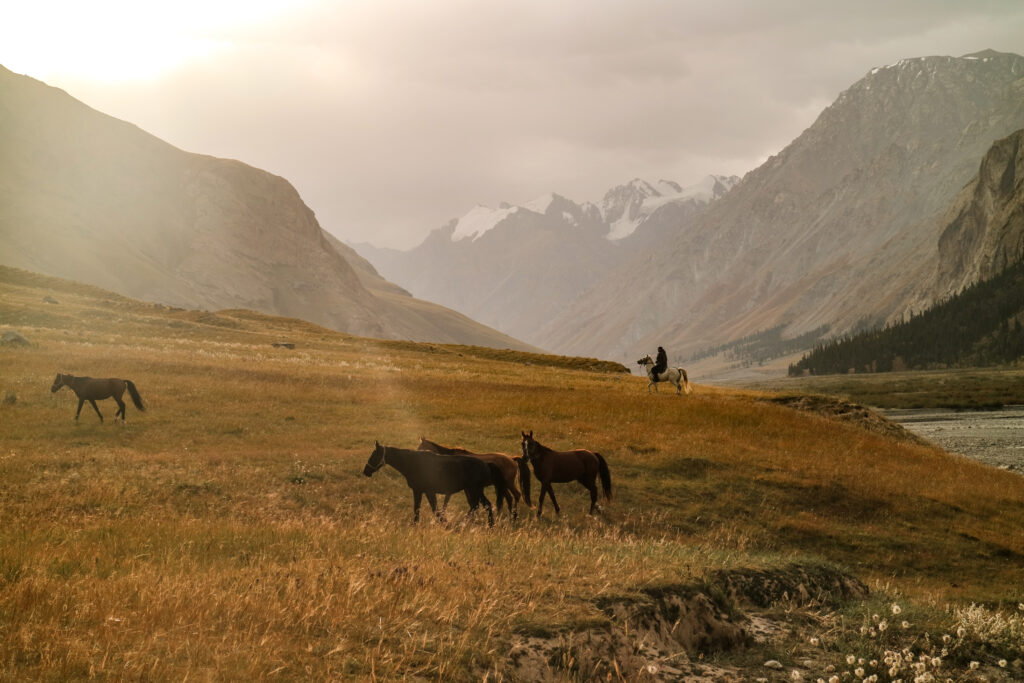
Kyrgyzstan is mountains without interruption. The Tian Shan (‘Celestial Mountains’) run east-west across the country, with peaks above 7000m. Between the ranges lie high summer pastures (jailoos) at 2500 to 3500m — vast open grasslands used by nomadic herders in the summer months. Alpine lakes, glaciers, deep river gorges, and canyon systems enrich the landscape. The colours shift dramatically with season: snow-white in winter, deep green in early summer, golden by late August.
Climate
Continental with strong altitude variation. Valleys and lower elevations (below 2000m) are warm in summer (20–30°C) and cold in winter (-10°C to -25°C). The jailoos and high passes experience significant daily temperature swings — warm midday, cold at night regardless of season. Afternoon thunderstorms are common in July and August. Snow is possible at altitude any month of the year. Winter in the high mountains brings sustained cold (-25°C to -35°C). The amount of snow differs substantially between regions.
Best Time to Visit
For most tunduk summer activities, the operating season in Kyrgyzstan runs June to September. Conditions for ski and splitboard touring are ideal in January and February. In high altitude also significantly longer. The jailoos are accessible from mid-June when snow has melted and cleared the passes. September is arguably one of the best time for travelling — stable weather, few tourists, and the landscape is turning golden. Horse trekking works well from May through October at lower elevations. Weather can change rapidly at altitude regardless of season — always pack for cold.
Getting There
Fly to Bishkek (FRU, Manas International Airport). Direct connections from Istanbul (Turkish Airlines) and other international hubs. From Bishkek, tunduk handles all ground transportation. Trips to eastern Kyrgyzstan (Karakol area) require a half-day transfer by road from Bishkek.
Visa
EU, Swiss, and UK citizens: visa-free for up to 30 days.
US citizens: visa-free for up to 30 days.
Most other passports: e-visa available online or visa on arrival at Bishkek airport.
Passport must be valid for at least 6 months beyond your trip dates.
Verify current requirements before booking.
Currency & Money
Currency: Kyrgyz Som (KGS).
EUR/USD easy to exchange in Bishkek.
Cash essential outside Bishkek.
Limited ATMs in rural areas.
Budget approx. CHF 15–30/day for personal expenses on trip.
Culture & Language
Kyrgyz hospitality is genuine and unconditional.
Accept food and drink when offered.
Remove shoes before entering yurts or homes.
A small gift for hosting families is appreciated but not expected.
Guides are partners — treat them accordingly.
The relationship with horses is deep; treat the animals with respect.
Travel Safety
Is it safe to travel Here?
Kyrgyzstan is a safe destination for adventure travel. Political stability has improved significantly since 2010. In Bishkek, normal urban awareness applies. In the mountains, risks are environmental — altitude sickness, rapid weather changes, and natural hazards. Limited to no rescue infrastructure in remote locations. tunduk guides are trained in wilderness first aid. All guests must hold travel- and health insurance covering rescue, medical emergency, and repatriation. tunduk will ask for a proof. We brief all guests on altitude acclimatisation and risk management before departure.
11 days on horseback through the wild mountains, high passes, alpine lakes, and nomadic valleys of Kyrgyzstan — the ultimate long-distance horse trekking adventure.
A moving paragliding basecamp through the mountains of Kyrgyzstan. Enjoy flying – we take care of logistics, access, and local knowledge. Expect a diverse flying program (H+F, XC, local flights) shaped by weather, curiosity, and group dynamics.
Experience day rides across Kyrgyzstan’s stunning landscapes, exploring different landscapes and staying in traditional yurts for a comfortable, authentic adventure.
A spectacular and wild horse trekking. We’ll be crossing high mountain passes, a glacier, rivers,.. We’ll be surrounded by the greatest mountains of Kyrgyzstan and lot’s glaciers from the saddle or at the camp.
Discover Kyrgyzstan on a tour on foot, by car – and maybe even part of the way on horseback? For anyone who loves being outdoors and in nature. Individuals and families/groups.
Immerse yourself in the natural landscape and experience Kyrgyzstan’s traditional nomadic culture in three different yurt camps. A group and family adventure with a focus on nature, sports, and fun.
Is it safe to travel in Kyrgyzstan?
>> Yes. Kyrgyzstan is one of the safest countries in Central Asia for travellers. The main risks are environmental — altitude, weather, natural hazards, remote terrain. tunduk guides are trained in wilderness first aid and all routes are planned with evacuation options.
Do I need a guide for mountain travel?
>> Local guide are essential for excursions into backcountry terrain at elevation. Our guides have generational knowledge of the terrain and conditions that no map and no instructions can replicate.
Is the water safe to drink?
>> In the high mountains, water from glacier streams is generally clean and drinkable. We nevertheless filter water for drinking. In villages and lower elevations, the use of a filter or purification tablets is mandatory. tunduk provides guidance on water safety per route.
Have a trip in mind?
We keep groups small on purpose. Tell us when you want to go.